
Ciprofloxacin on this page refers to the topical eye and ear formulation commonly known as Ciloxan, not the oral tablet forms sold under different names and strengths. It contains ciprofloxacin hydrochloride and is used for certain bacterial eye infections, corneal ulcers, and selected ear infections caused by susceptible organisms.
Review the current ciprofloxacin offer page for formulation details, labeled use, and checkout requirements.
Confirm that the listing matches topical eye or ear drops before proceeding.
This product belongs to the fluoroquinolone antibiotic class and works by blocking bacterial DNA gyrase, which stops bacterial replication. For anyone looking to buy ciprofloxacin online, the important first step is confirming the correct formulation, indication, and safety profile before proceeding to the offer page.
What this ciprofloxacin product is used for
Ciprofloxacin eye and ear drops are indicated for topical treatment, not for general systemic infection management. In the ophthalmic setting, labeled uses include corneal ulcers and superficial infections of the eye and adnexa caused by bacteria susceptible to ciprofloxacin. In the otic setting, uses include acute otitis externa and acute otitis media with drainage through a tympanostomy tube when the causative bacteria are susceptible.
The formulation described here contains 3.5 mg ciprofloxacin hydrochloride per milliliter, equivalent to 3 mg of ciprofloxacin, together with excipients such as benzalkonium chloride, mannitol, disodium edetate, acidity regulators, and purified water. That composition matters because topical tolerability, preservative sensitivity, and proper route of use all affect whether this is the right product for the intended infection.
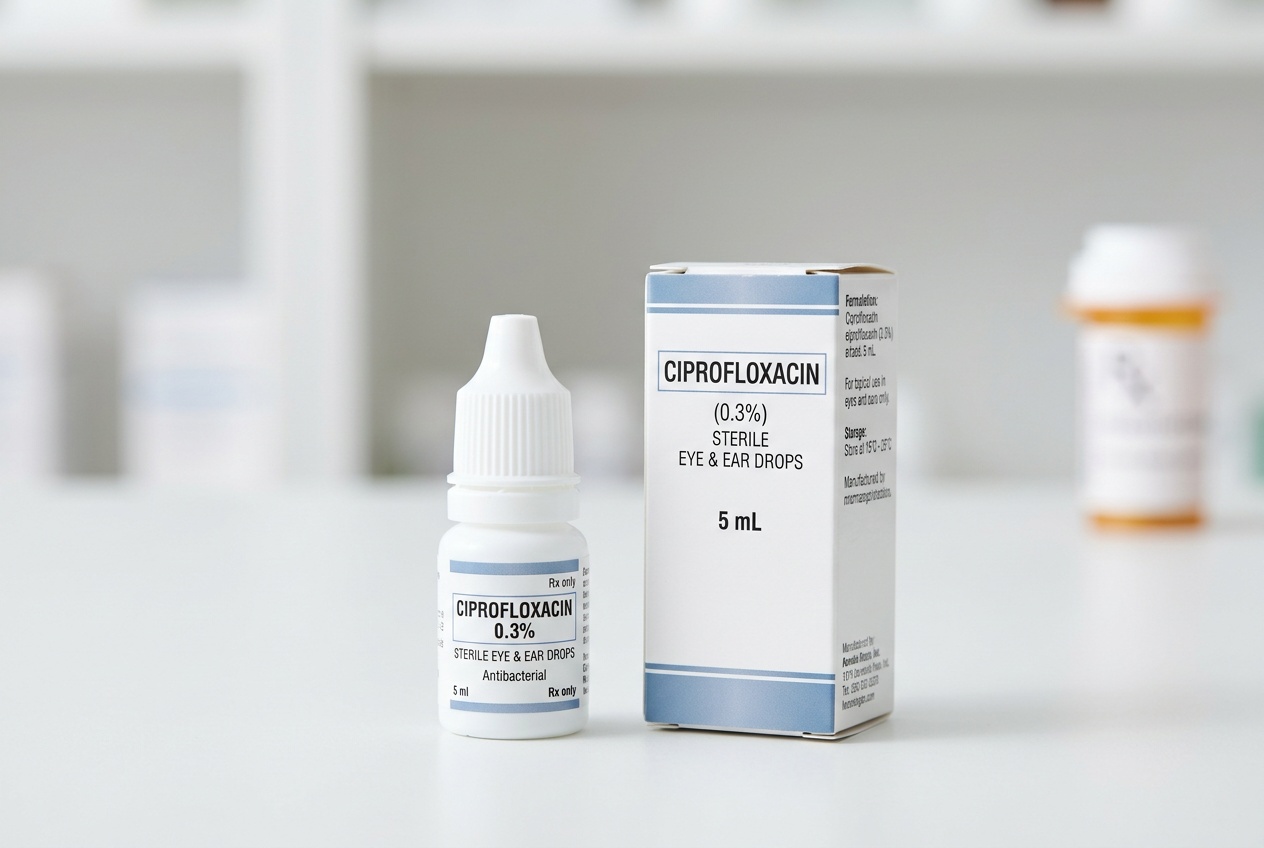
Before you buy ciprofloxacin online, confirm the form and indication
The keyword buy ciprofloxacin online can refer to several very different products, including oral tablets and topical drops. This page is specifically aligned with Ciloxan-style eye and ear drops, so the listing should match the intended route of administration, bottle instructions, and approved use. Choosing the wrong form can delay treatment and create avoidable safety problems.
A careful buyer should review the product page for the exact dosage form, strength, route, and patient information. If the page mentions oral tablet dosing, systemic infection treatment, or tablet brand names without clearly separating them from the topical product, that is a sign to pause and verify the listing before checkout.
- Confirm the listing is for eye and ear drops, not tablets.
- Check the strength and active ingredient details on the offer page.
- Review whether the intended use is ocular, otic, or both as labeled.
- Look for patient leaflet or prescribing information access before purchase.
- If symptoms are severe, recurrent, or unclear, seek clinician assessment rather than self-selecting treatment.
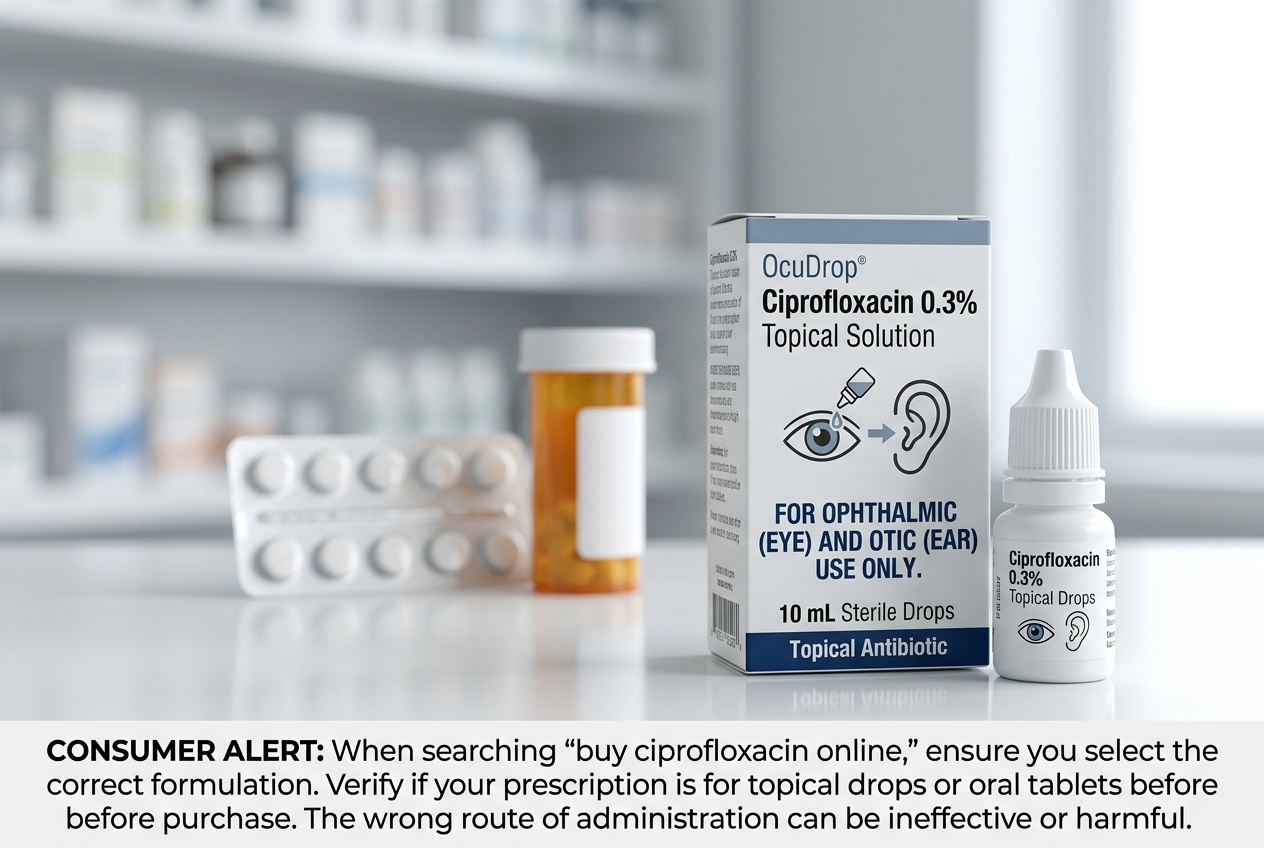
Topical Ciprofloxacin Form and Product Details
Topical ciprofloxacin listings may refer to an ophthalmic solution for the eye, an ophthalmic ointment, or an otic product for the ear. Each route and formulation has its own label and container. Do not assume that eye drops, ear drops, ointment, and oral ciprofloxacin are interchangeable.
Before checkout, compare the full product name, intended route, solution, suspension, or ointment form, labeled concentration, bottle or single-use container size, manufacturer, and pack quantity. These fields are commercial product characteristics for matching an offer to an existing prescription, not instructions for choosing a schedule.
The suitable form and regimen depend on the diagnosed condition and the directions supplied by a prescriber and dispensing pharmacy. If a listing combines broad “eye and ear” language without identifying the exact item, ask the pharmacy to confirm the route and labeling before payment.
- Confirm ophthalmic or otic use
- Compare formulation, concentration, and container size
- Review prescription handling and delivery terms
- Use only the leaflet supplied for the exact product
Safety, contraindications, and who needs extra caution
This product should not be used in patients with hypersensitivity to ciprofloxacin, other quinolones, or any component of the formulation. Serious hypersensitivity reactions, including anaphylactic reactions, have been reported with quinolone therapy. The medicine should be stopped at the first sign of rash or another allergic reaction, and urgent medical care may be required if swelling, breathing difficulty, or collapse occurs.
Prolonged antibacterial use may allow non-susceptible organisms or fungi to overgrow. The product information also advises discontinuation at the first sign of tendon inflammation, reflecting a known fluoroquinolone class warning even though systemic exposure after topical use is low. Clinical experience with the eye drops in children younger than 1 year is limited, and safety and efficacy for ear drops in children under 1 year have not been established.
Pregnancy requires caution. Available information does not establish adequate safety in pregnant women, and use is generally best avoided unless a clinician considers it necessary. Breastfeeding also calls for caution because ciprofloxacin is known to appear in breast milk after oral use, while excretion after topical eye or ear application is uncertain.
- Avoid use if you have a known quinolone allergy.
- Stop treatment and seek help if rash, facial swelling, or breathing difficulty occurs.
- Do not wear soft contact lenses during treatment for an eye infection.
- Use in pregnancy or breastfeeding should be discussed with a clinician or prescriber.
Possible side effects and practical treatment issues
Reported adverse effects with Ciloxan include local eye and upper airway complaints such as eye discomfort, ocular hyperemia, itching, photophobia, tearing, discharge, corneal deposits, rhinitis, dysgeusia, headache, dizziness, and stye. Not every patient experiences these effects, and many are mild and temporary, but worsening irritation or lack of improvement should prompt review.
Temporary blurred vision can occur after eye instillation, so patients should wait until vision clears before driving or operating machinery. For ear treatment, data on driving effects are limited, but any unexpected dizziness or treatment-related symptoms should be assessed cautiously. Accidental ingestion of the contents of one bottle is not expected to cause toxic effects based on the product profile, though medical advice is still appropriate if concerning symptoms occur.

Prescription review and what to check on the offer page
Whether you can complete a purchase depends on the legal and pharmacy requirements that apply where the product is supplied. Buyers should expect the offer page to state any prescription handling, questionnaire, pharmacist review, or checkout eligibility steps clearly rather than implying universal no-prescription access.
The safest approach is to use the listing as a route to product information first: verify the indication, read the warnings, and confirm that symptoms fit a bacterial eye or ear infection rather than allergy, viral illness, fungal infection, or another cause. If pain is severe, vision is affected, discharge is heavy, symptoms involve a newborn, or ear symptoms persist, clinician evaluation is the appropriate next step before ordering.
- Check whether a prescription or clinical review is required at checkout.
- Read the contraindications and warnings before purchase.
- Confirm the listing includes official labeling or patient information.
- Do not rely on a product page alone for diagnosis of red eye or ear pain.
Common Questions About Ordering Topical Ciprofloxacin
Is this the same product as oral ciprofloxacin?
No. Topical eye and ear products use different formulations, routes, containers, and labeling. Match the listing to the exact prescribed product.
Can an ophthalmic product be replaced by an otic product?
Do not make that substitution from an online listing. Confirm the intended route and exact formulation with the prescription and dispensing pharmacy.
What should be included in a price comparison?
Compare the same route, formulation, concentration, and container quantity, then review prescription requirements, shipping charges, delivery timing, and final checkout total.
Where can the product forms be verified?
The FDA Ciloxan label below documents an ophthalmic solution, while the separate MedlinePlus otic reference explains ear-specific products. Use the source that matches the exact listing.
Official Sources for the Listed Topical Form
Two references are included because eye and ear products are separate: the FDA Ciloxan ophthalmic-solution label confirms the eye formulation and concentration, while MedlinePlus ciprofloxacin otic information covers ear-specific products. Use the reference that matches the exact offer and supplied leaflet; neither replaces individual prescription directions.
Content reviewed April 2026